Walkthrough
Living with it
Albumary's app screens are currently shown in English.
Two players
The store has a record player and a cassette deck. Two, not one, because records and cassettes are different things.
Both can be loaded at once, and the shelf along the bottom shows you which is which. A record sits at the middle — and once a tape is loaded too, a pair of reels beside it with a switch between them. The lit one is what you're looking at. The small dot beneath is what you're hearing.
On a phone the marks take a row of their own, just above the transport; on a Mac they sit in the middle of one strip. Same shelf either way.
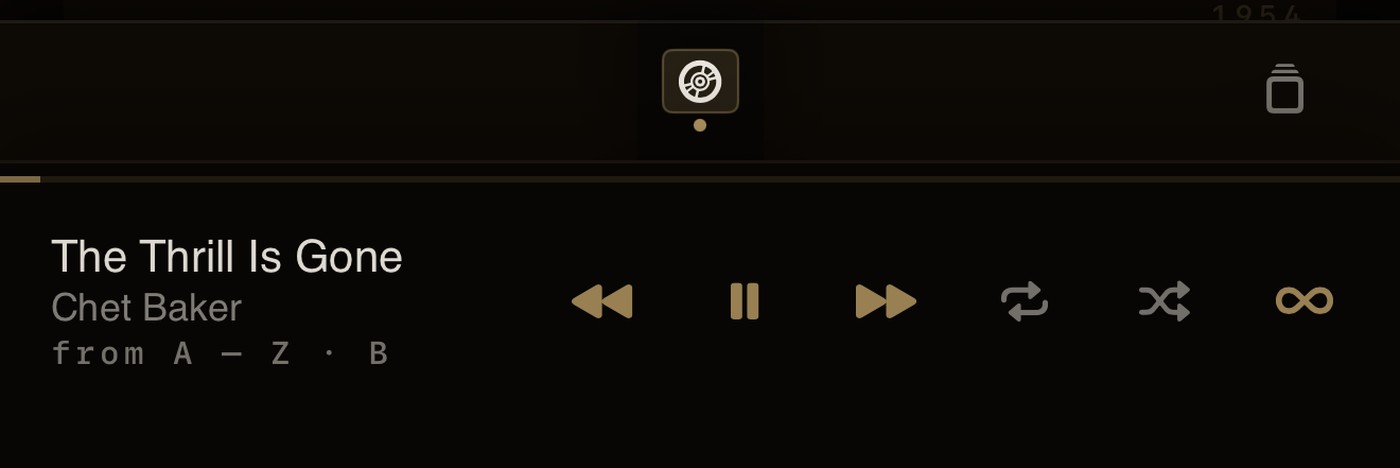
Here they agree: the record is lit and the dot is under it. Full transport, and the loop at the far right — end of the album and it rolls on to the next. So one tap at the Counter or in New Arrivals will play you through an afternoon, record after record, without asking again.
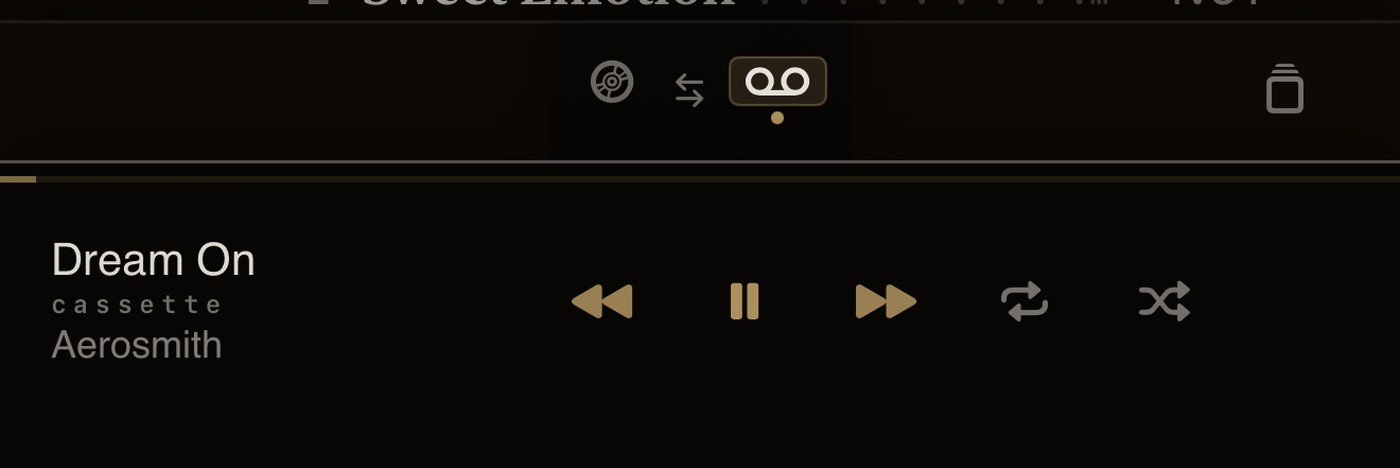
Same again on the cassette side, with one thing missing on purpose. In the store, a tape doesn't roll on. It's a finite thing somebody made in an order; when it ends, it ends. Nothing slides over to fill the gap: the control hasn't gone away, it just doesn't apply here.
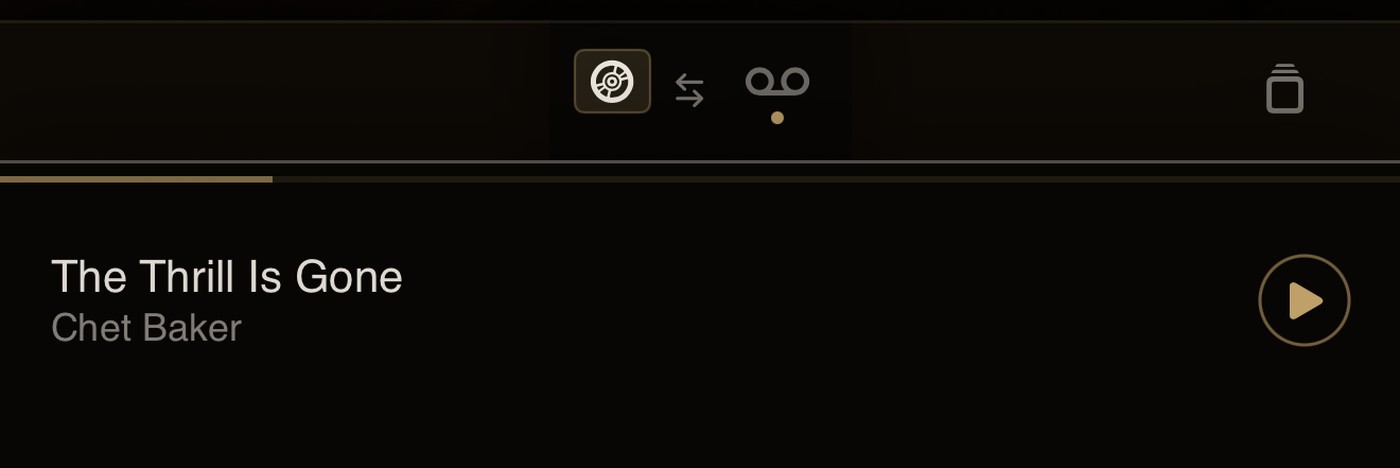
And here they part. The record is lit but the dot is under the reels: you have switched to look at the album while the tape keeps playing. The transport is gone and one amber play remains, because the only thing that button can do now is take over.
Switching looks. Playing commits.
You can glance at the other side without the music changing under you. The audio moves only when you press play — always a decision, never a side effect. Notice too that the paused side loses its playing in albumary line, because it isn't.
So a song on a playlist stops you, you follow it down into the whole record, you listen — and when you come back up, the tape is exactly where it was. In most apps that thread snaps the moment you follow it.
The player remembers the last album you played, and where you were in it. Close the store on that device, come back later, and it's still on the player at that point — one press and it goes on. When the last track runs out the player is empty and the strip goes with it, the way a record ends and the arm lifts.
The hold
Beside the two players there's a small tin. Tap it and whatever's playing goes in. Not a queue, not a favourite — a song you don't want to lose but don't want to play right now, set down where you'll pass it again. The tin fills to show it's holding something.
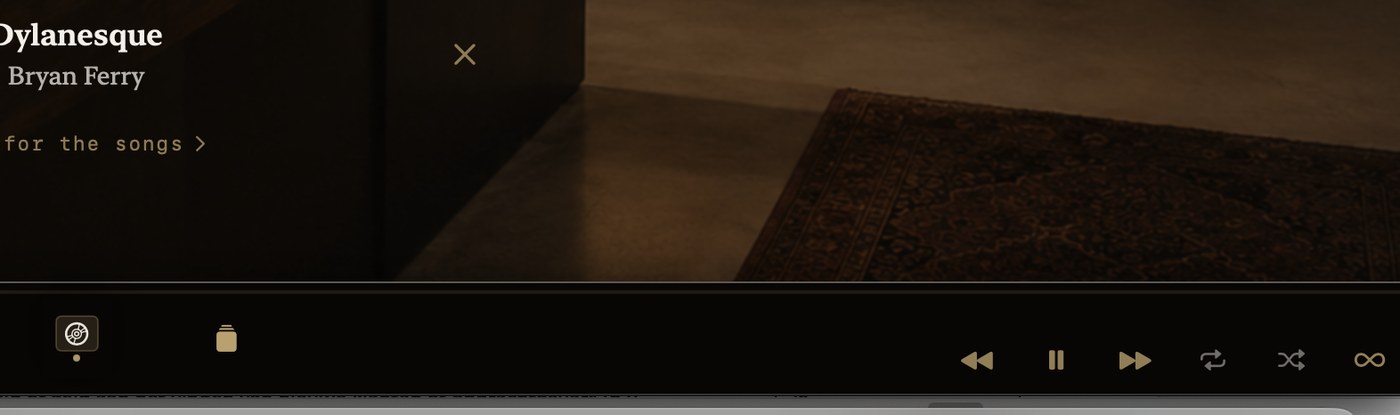
You get it back at the Counter, and the way out is put it back rather than delete — because you never threw it away, you set it aside.
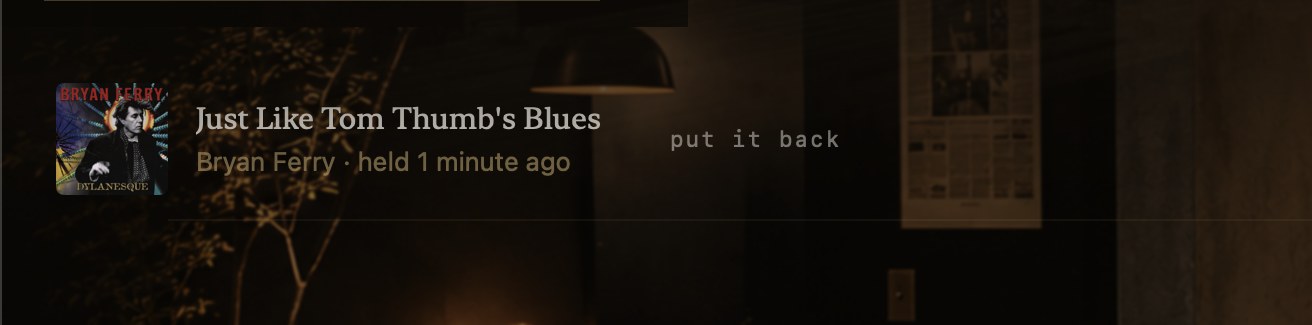
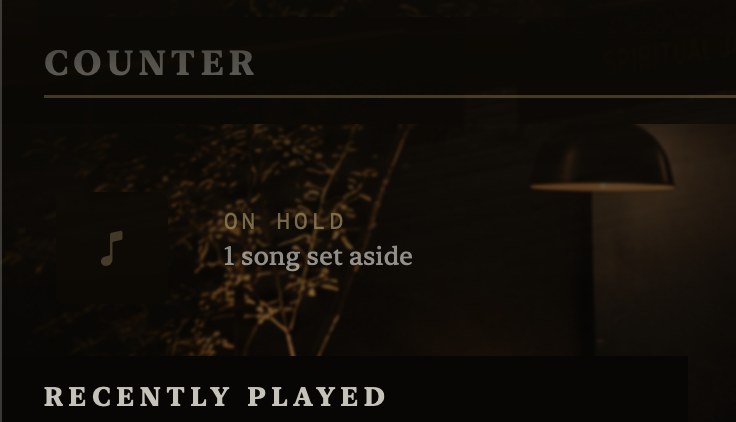
The Counter grows a line for it while it's there, and loses the line when it isn't. Nothing announces itself; the room just holds what you set down.
In the car
Plug in and three of the rooms come with you — your cassettes, the Counter, New Arrivals — and one shelf that only exists here.
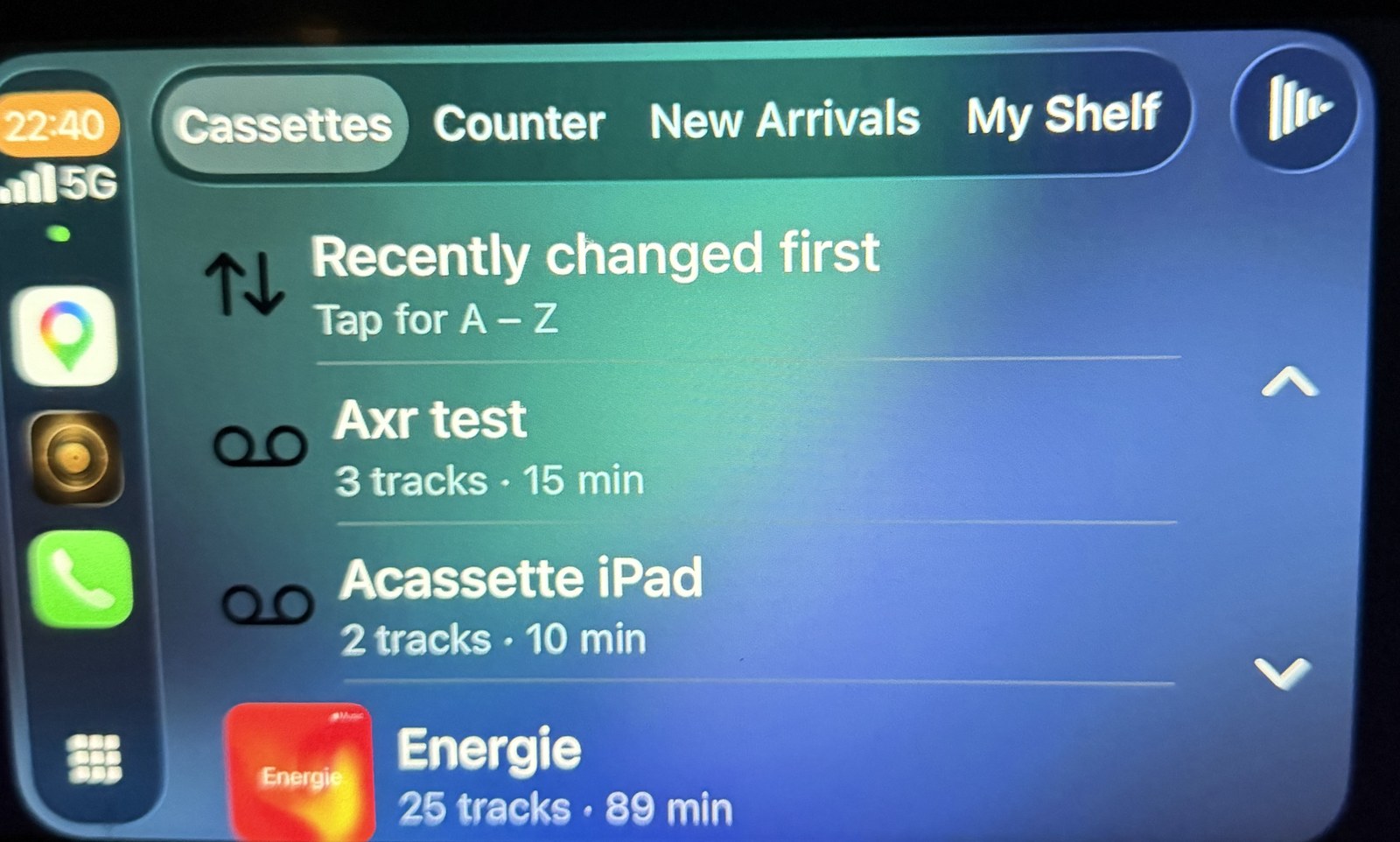
The tapes sort the way they do at home: A–Z, or what's changed lately. The Counter is still what you played, wherever you played it. A tape picks up where you left it, the same as indoors — and if you'd rather have the whole thing again, the top of the list offers to rewind it.
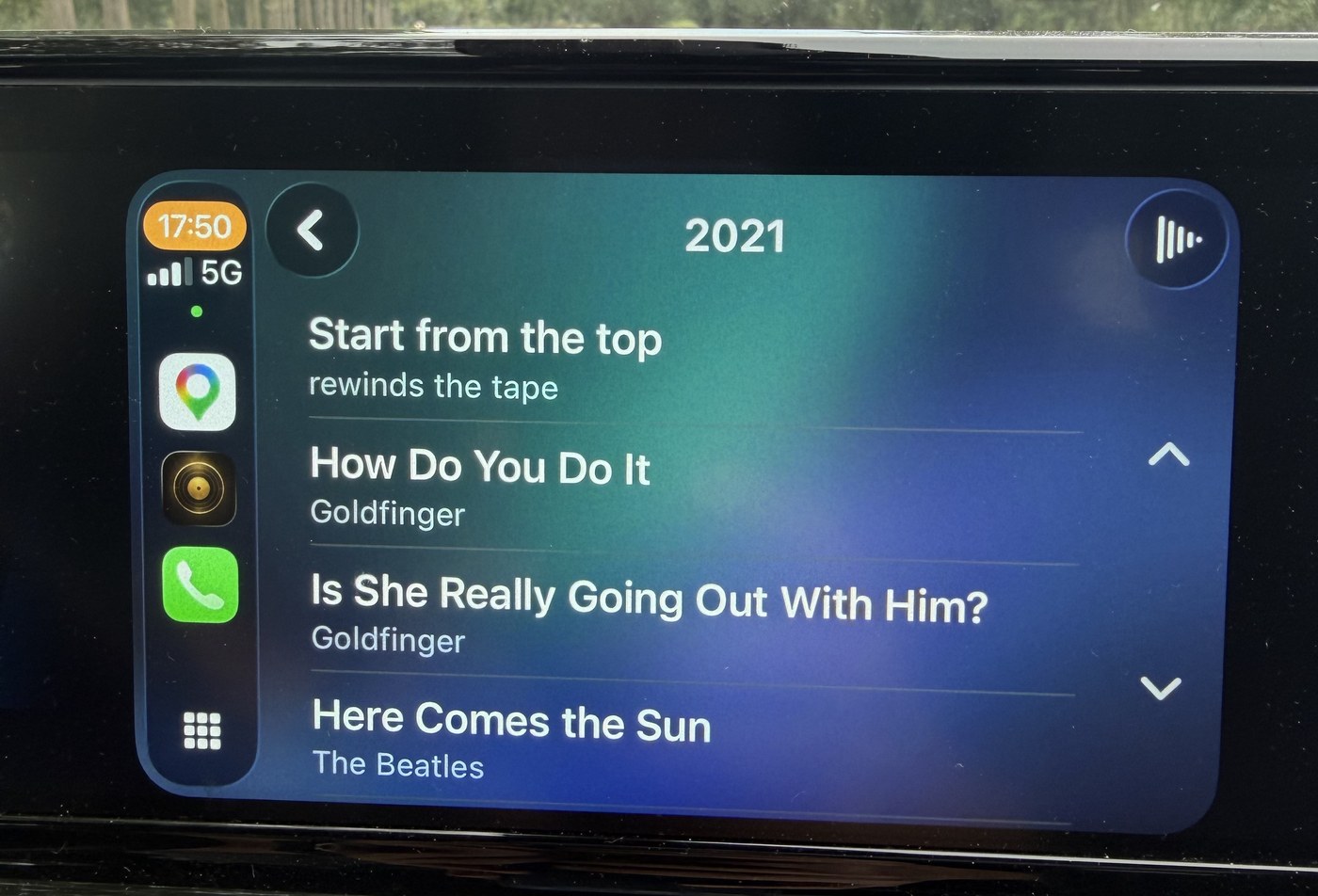
My Shelf is the one you pack. Back in the store on your phone — the device the car is running on — a line on any record offers to put it on the car shelf. Take it and the record is waiting when you get in. The store's own picks ride along too, including ones you never saw at home.
The rest behaves the way a car should. The tin is here, so a song worth keeping can be set aside without looking away. The tracklist shows what's coming and, beneath it, what you've already been through. The buttons on your steering wheel work.
And all of it runs with the phone in your pocket and the screen dark.
The everyday
After a while it's where the music is. Not only the evening browse — the ordinary listening too, the record put on while you're doing something else, an afternoon that started with one tap in New Arrivals.
It isn't faster than anything else, and it was never meant to be. But the thing you put on last Tuesday is here, and so is the record you left half-played this morning.
That isn't what it was built for. It's what happens once it's yours.
The store's note
Now and then the store writes down what it noticed.
At the end of a season, or the end of a year, a note is waiting on the counter. Cream paper, two sides, and it reads like something the shopkeeper jotted down rather than a summary a machine produced — the songs your collection holds most, what came in, what you put on, and a few things that only come out of looking twice.
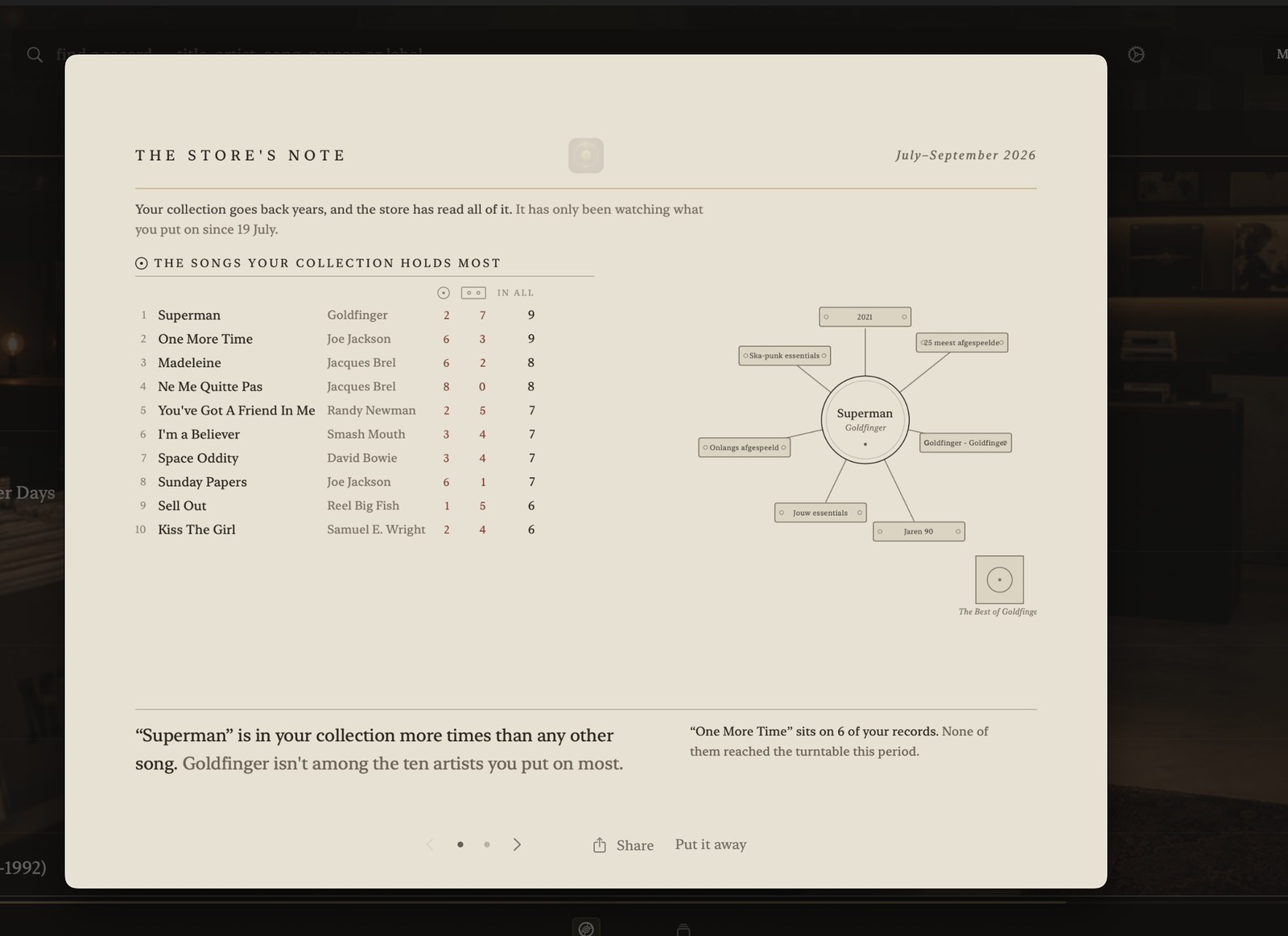
Pinch to bring it closer, the way you would a sleeve. Share it if you like — it goes out as a page, not a link.
It's written only from what the store itself has seen. The note says so at the foot, and it says when its memory starts. A note about a season the store wasn't watching would be a made-up note.
It waits on the counter until you open it, then goes quiet — a line at the top of the room, there whenever you want it again, until the next note replaces it. Quarterly, yearly, or not at all — the store writes nothing down if you'd rather it didn't.
A record that isn't yours yet
Your tapes bring things in. The playlists Apple keeps for you are living things — Apple refreshes them, and the cassette changes with them, so the tape you have is whatever the playlist is this week.
Which means a tape can carry a song from a record you don't own. Follow the line under the track and the store shows you that record anyway, with the song you have on it, under the number it has on the sleeve.
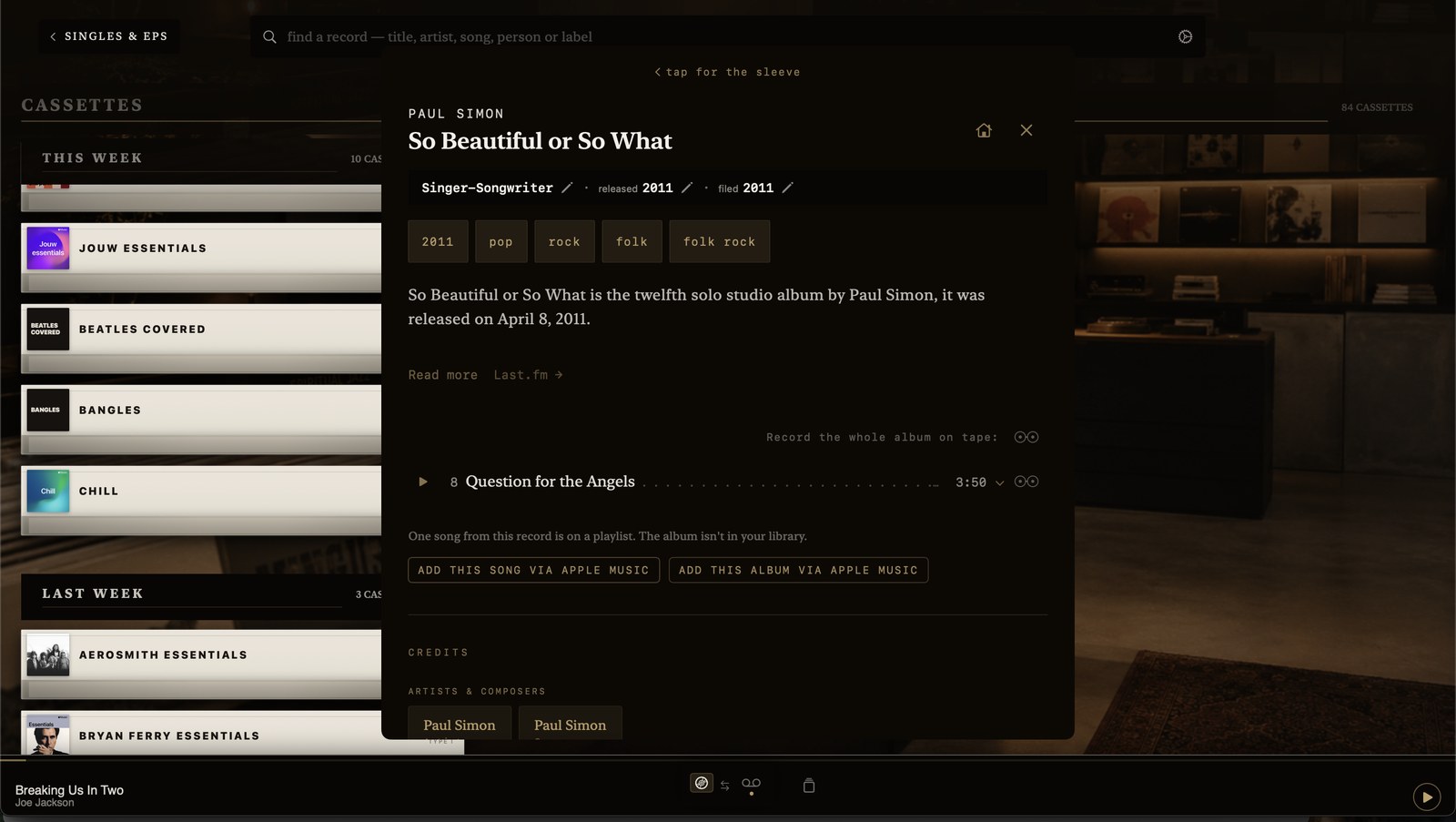
Turn it over and it says so, and offers two doors: the song on its own, or the whole record. Take one and on a phone or iPad you never leave the shop — it's simply yours. On a Mac, Apple Music opens with the record already found; add it there and come back.
Until then it behaves like any other record in the shop — you can search for it, read what's printed on it, set it in the tin.
And sometimes what turns up is a record you already have, in another pressing. A playlist carrying the deluxe edition puts the deluxe on the shelf beside your plain copy, under its own full title. The store won't pretend two editions are the same record.
What's yours
A gear in the corner of every room.
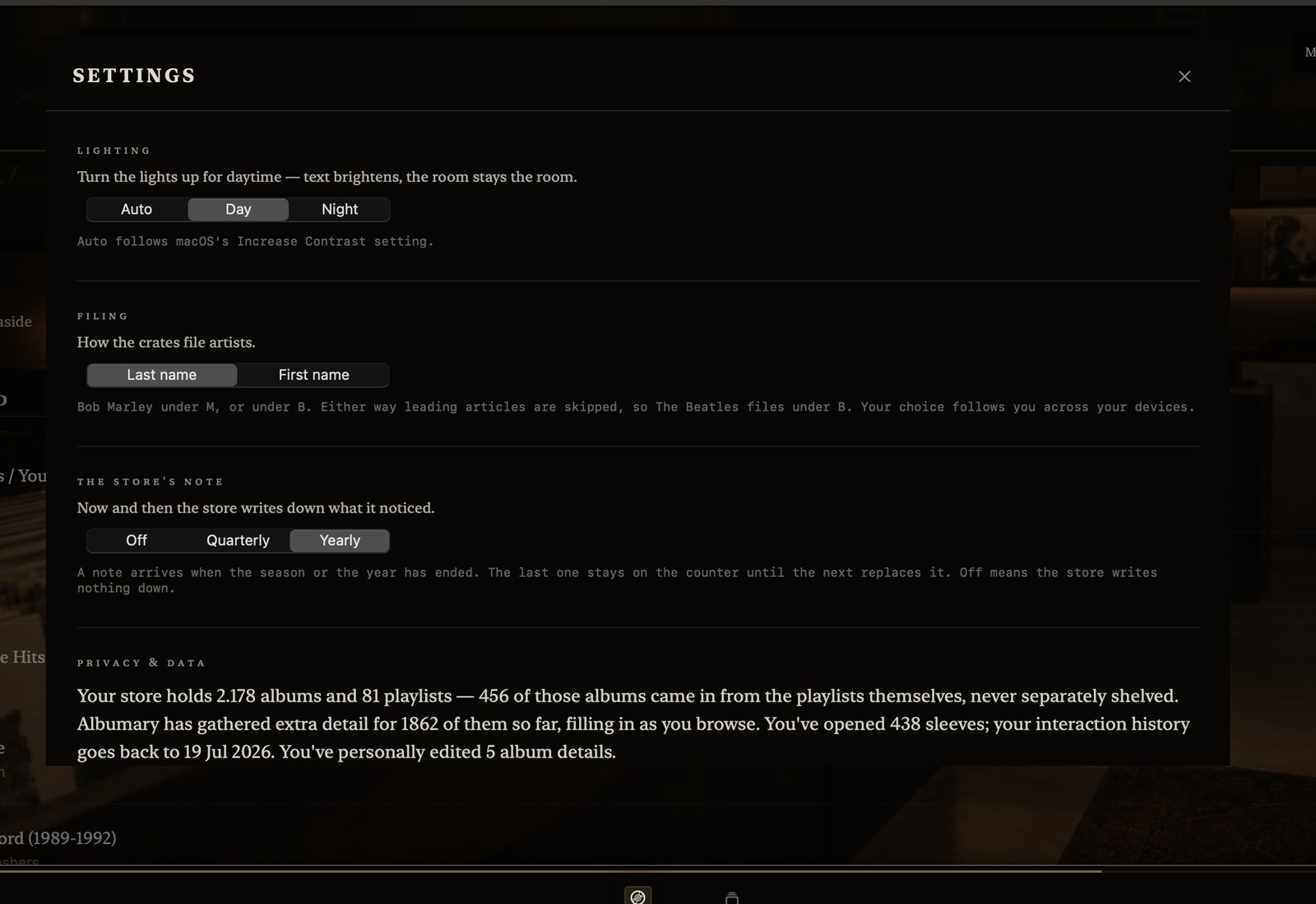
Lighting — Auto, Day or Night. It doesn't follow you between devices, because daylight is a property of the room you're actually standing in.
Filing — last name or first. Bowie under B or under D. That one does follow you, because filing is taste rather than situation.
The store's note — quarterly, yearly, or off. The only one of the three that decides whether something gets written down rather than how the room looks.
And what the store knows, in plain sentences rather than a table.
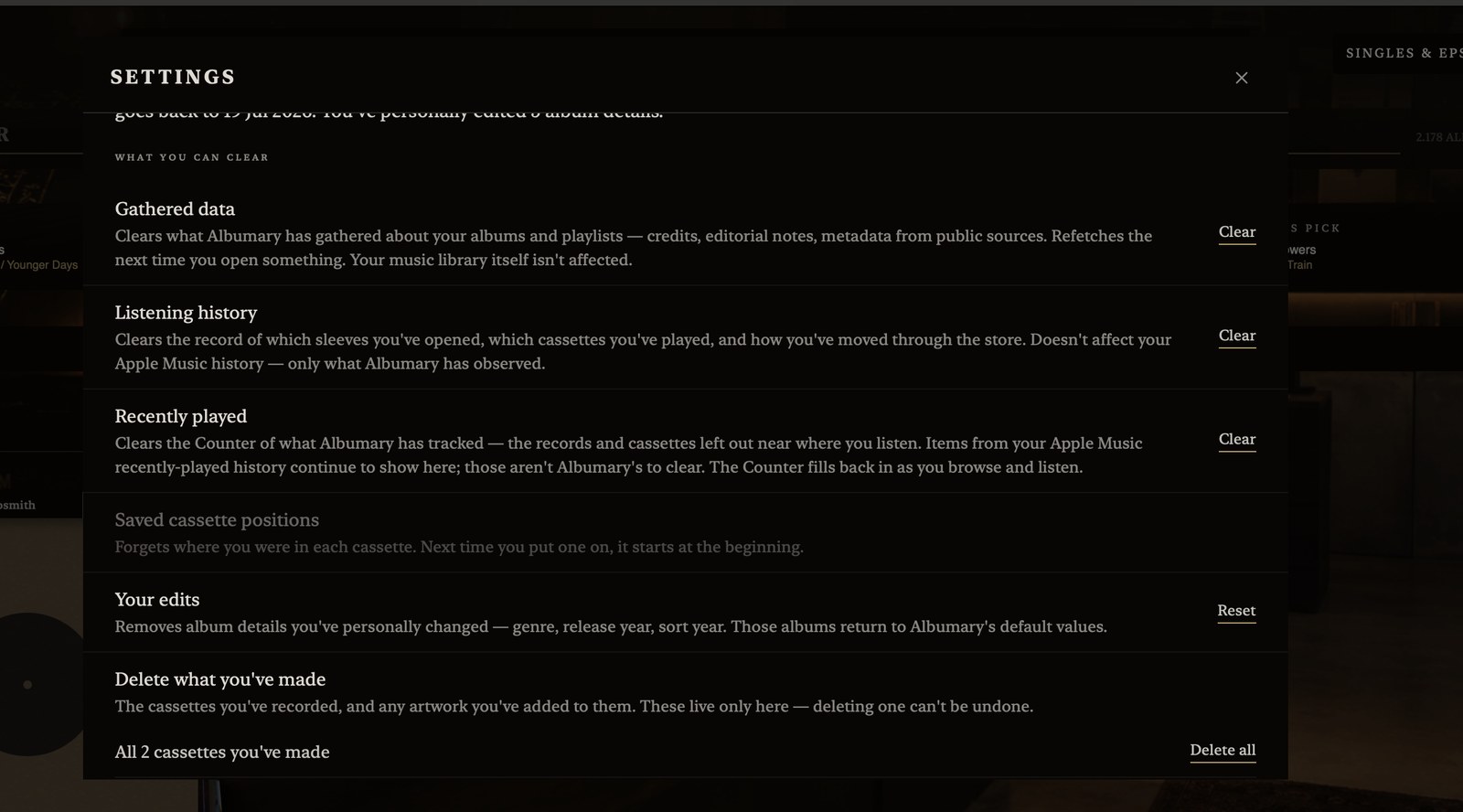
You clear what was gathered, and it comes back as you browse. You reset your corrections, and the fields fall back to what the sources say. You delete what you made, one tape or all of them, and it's gone — because it only ever existed here. Nothing is queued or processed within thirty days. It's on your device; deleting it deletes it.
There is no Albumary server. When the app reaches out to the world it asks about records — credits, covers, release dates — never about you. What travels between your own devices travels through your own iCloud: your edits, your tapes and where you left them, your cover art, what your collection has learned. What you listened to never travels at all.
What it becomes
Most things you install are as good as they'll ever be on the first day. This one starts thin.
That first evening the credits are sparse, the inner sleeves are short, and the map has little to walk. Then you browse — and it fills in behind you. Every sleeve you open is another record looked up, another set of names to hold against the rest of your shelves.
It happens while you're in here, not while you're away. With the app shut, nothing is running. The more evenings you spend in it, the more it has.
It never finishes gathering — some records have no credits to find, and it will say so rather than invent them. But after a few evenings the store knows more than it did when you walked in, and what it draws will be yours, because it's drawn from your shelves and nobody else's.
What it isn't
No recommendations. No feed. No for you. No infinite anything. It never goes looking for music you don't have, and it never asks you to keep scrolling.
You buy it once. No subscription, no meter running.
€17.99, and then it's yours. One purchase — it opens on your Mac, your phone, your iPad, and in the car.
It gives you back what you already have, as a place.